
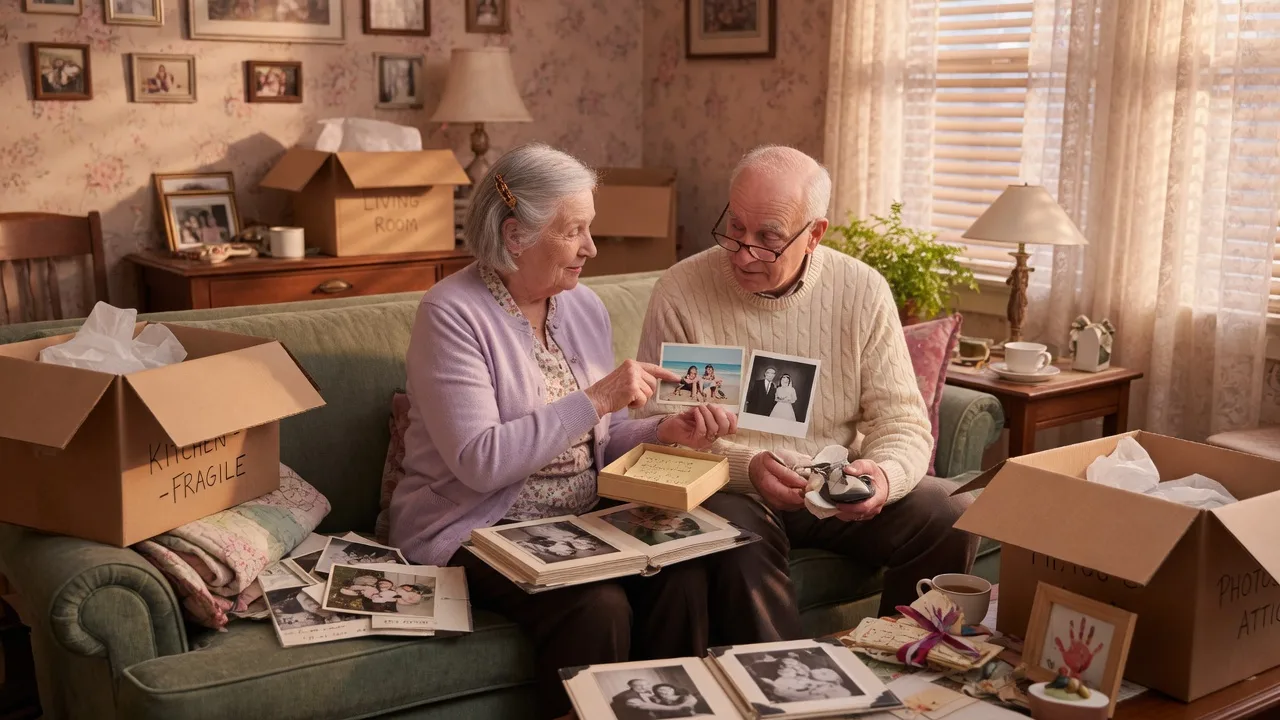
After decades in a family home, the thought of packing it all up can feel impossible. Where do you even begin? How do you decide what to keep, what to give away, and what to let go? And how do you handle the emotions that come with leaving a home filled with memories? This guide walks you through the process with empathy, practical steps, and professional guidance.
When should I start thinking about downsizing?
The best time to start thinking about downsizing is before you have to. Many seniors wait until a health crisis, a fall, or the death of a spouse forces the decision. While I can absolutely help in those urgent situations, starting the conversation early gives you more control, less stress, and better outcomes.
Some signs it might be time to consider downsizing:
- The house feels too large for one or two people
- Maintenance and upkeep have become overwhelming
- Stairs are becoming difficult or dangerous
- The kids have been gone for years and half the rooms are unused
- You're spending more time and money on the house than enjoying it
- A health event has made the current home impractical
The emotional side of downsizing
Let's be honest about something: downsizing isn't just a logistical challenge. It's deeply emotional. Every drawer, every closet, every shelf holds memories. The guilt of "getting rid of" family things is real, and it's something I see with almost every client.
Here's what I want you to know: you're not erasing memories by letting go of objects. You're making space for your next chapter. The love, the stories, the traditions, they live in you and your family, not in the furniture.
Give yourself permission to take this slowly. Start with one room, one drawer, one box at a time. And don't hesitate to ask for help, whether it's a family member, a friend, or a professional senior moving specialist.
A step-by-step downsizing plan
Here's a practical framework I've refined over 23+ years of helping seniors through this process:
Step 1: Assess your new space
Before you start packing, know where you're going. Whether it's an assisted living facility, a smaller home, a condo, or moving in with family, measure your new space and understand what will fit. This helps you make informed decisions about what to bring.
Step 2: Sort room by room
Don't try to do the whole house at once. Pick one room and work through it systematically. Create four categories: keep, donate, sell, and discard.
Step 3: Prioritize what matters most
Start with the items that are most important to you and your family. Ask your children or grandchildren if there are specific pieces they'd like. This takes the pressure off and ensures meaningful items stay in the family.
Step 4: Handle the big stuff
Furniture, appliances, and large items often need to be addressed early. Decide whether to sell, donate, or give away. An estate sale company can help with valuable items.
Step 5: Prepare the home for sale
Once personal belongings are sorted, the home needs to be cleaned, repaired, and possibly staged for the market. This is where a real estate agent's network of contractors and professionals becomes invaluable.
How do I sort through a lifetime of belongings?
This is the part that stops most people in their tracks. Here are some strategies that work:
- The one-year rule: If you haven't used it in a year and it doesn't hold significant sentimental value, let it go
- Photograph it: Take a photo of sentimental items before donating or discarding. The memory lives in the photo
- One in, one out: For every item you keep in a category, let one go
- Start with the easy stuff: Broken items, expired food, old magazines. Build momentum before tackling the hard decisions
- Get help: A second set of eyes and an objective perspective make an enormous difference
Estate sales and donations
For valuable items, an estate sale can recoup some money while ensuring items go to people who will appreciate them. For everyday items, Goodwill, Habitat for Humanity ReStore, and local charities welcome donations. Many senior moving specialists can coordinate the entire process for you.
Preparing your home for sale
Once you've sorted your belongings, the home typically needs preparation before listing:
- Deep cleaning throughout
- Minor repairs (leaky faucets, loose handles, scuffed walls)
- Fresh paint in neutral colors
- Decluttered, depersonalized spaces
- Curb appeal improvements
- Professional photography
I coordinate all of this through my network of trusted contractors and professionals. You don't need to manage 15 different people. I handle the coordination so you can focus on what matters.
Finding your next home
Downsizing doesn't mean settling. The right smaller home can feel more comfortable, more manageable, and more enjoyable than the large house you're leaving. I help seniors find homes that fit their current lifestyle and future needs, considering factors like:
- Single-level living (no stairs)
- Proximity to medical facilities and pharmacies
- Walkability to shopping and services
- HOA-maintained exteriors (less upkeep)
- Proximity to family members
- Community features and social opportunities
Working with senior moving specialists
Senior moving specialists are professionals trained specifically in the logistics and emotional aspects of helping seniors relocate. They handle packing, sorting, coordinating with estate sale companies, and managing the physical move. I have trusted senior moving specialists in my network who treat every client with the dignity and respect they deserve.
Common concerns and how to address them
"My kids don't want my things." This is more common than you think. Many adult children simply don't have the space. Start the conversation early and don't take it personally.
"I can't afford to move." Moving costs money, but so does staying in a home that's too large, too expensive to maintain, or becoming a safety hazard. Let's look at the full financial picture together.
"What if I need this someday?" If you haven't used it in years, the chances are slim. Trust yourself to make decisions that serve your future, not your past.
Resources and next steps
Downsizing is a journey, not a single event. Whether you're planning ahead or facing an urgent situation, I'm here to help. I'll listen to your concerns, provide honest advice, and connect you with the professionals you need at every step.
Ready to start the conversation?
I specialize in helping seniors and their families navigate the downsizing process with empathy and expertise. Reach out for a no-pressure consultation.